
What are B2B Marketing Automation Platforms?
The nature of B2B purchasing has fundamentally shifted, rendering traditional marketing tactics increasingly ineffective. Today’s B2B buyers proactively reject traditional "push marketing" methods—with 72% of buyers reporting they actively block promotional messages—preferring to complete over 70% of their information gathering independently in the anonymous phase. This preference for self-service means that for B2B enterprises, success is achieved not by interrupting customers, but by attracting them with valuable, relevant content when they are actively seeking solutions.
This strategic pivot towards Inbound Marketing is the core utility of a B2B Marketing Automation Platform (MA Platform). MA platforms are integrated SaaS solutions designed to centralize data, automate repetitive marketing tasks, and enable sophisticated, personalized customer journeys, ensuring that leads who actively seek a solution convert up to three times faster.
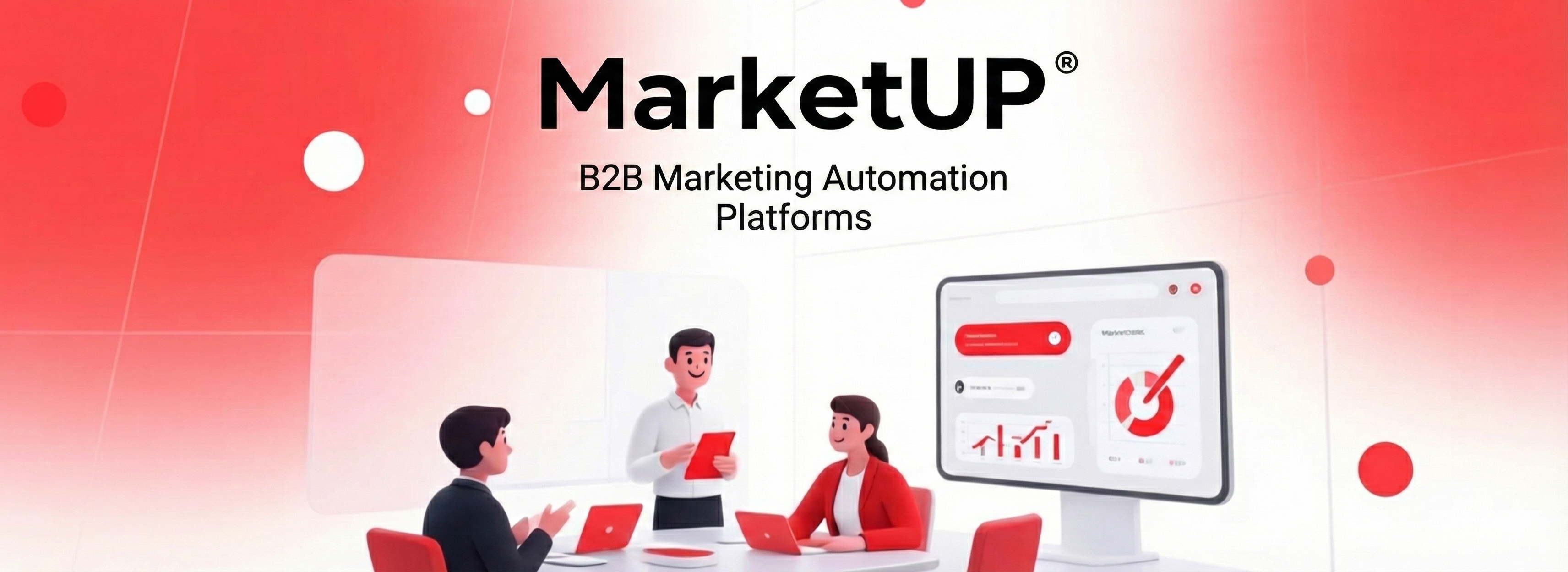
I. Defining the B2B Marketing Automation Platform
II. Essential Capabilities of B2B MA Platforms
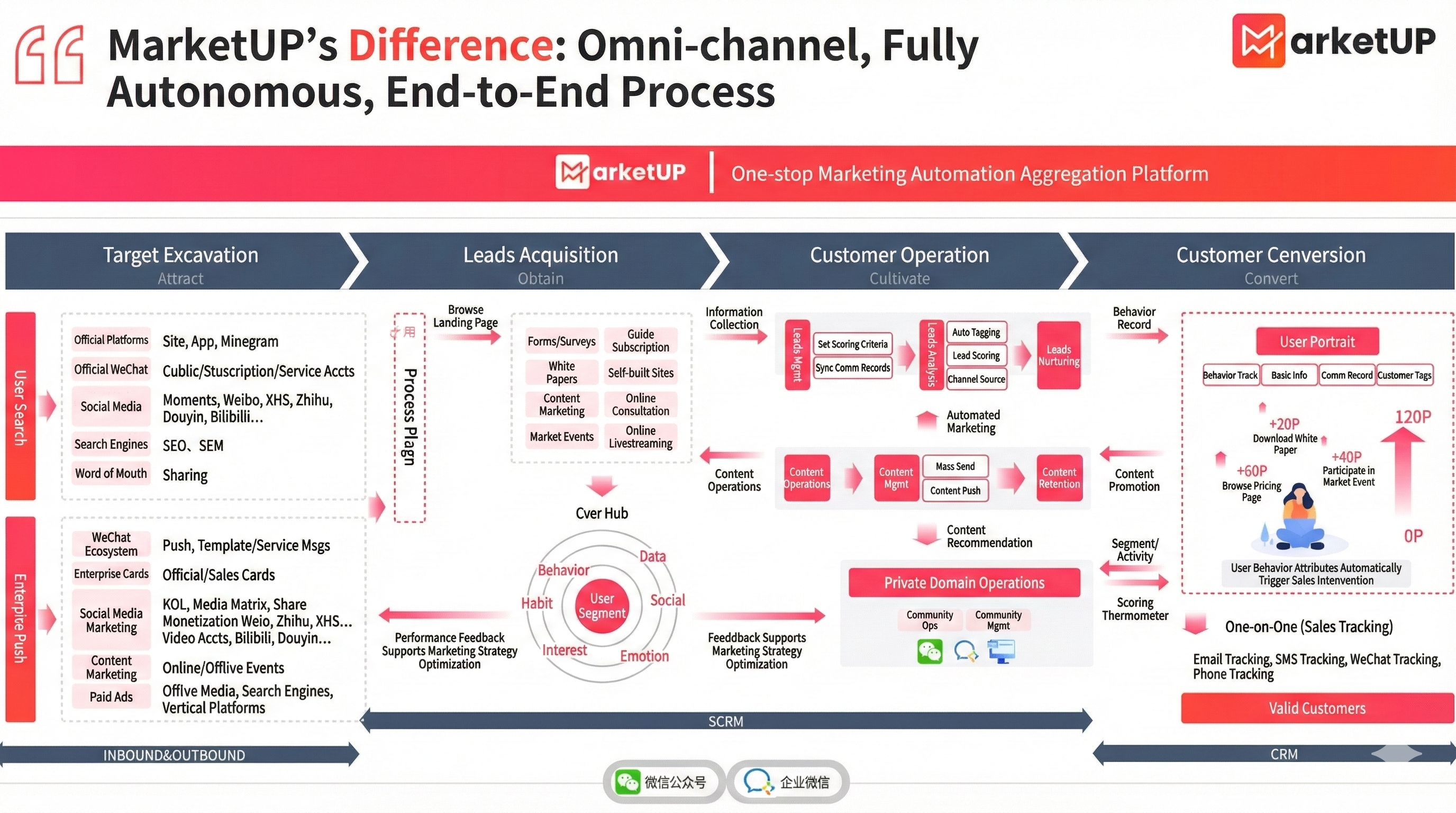
1. Data Aggregation: Achieving the 360° Customer Profile
- Full-Process Data Integration: The platform must integrate data across all channels (e.g., official website, mini-programs, WeChat public accounts, EDM),.
- UTM Parameter Tracking: The platform utilizes UTM parameters and marketing embedded points to automatically record the source, demand, and quality of every lead,.
- Customer Profiling: By collecting both customer information (name, phone number, company) and behavioral data (pages visited, time spent, documents downloaded), the platform builds a 360° customer profile and applies automated tags (such as source tags, content preference tags, and lifecycle stage tags),.
2. Automated Nurturing and Customer Journey Design
- Lead Scoring and Segmentation: The platform classifies leads based on set standards (Leads, MQL, SQL, Opportunity). Lead scoring automatically assigns points based on customer behavior (e.g., submitting a trial application, downloading material, attending an event).
- Workflow Automation: The platform allows the design and execution of complex, customized workflows,. For example, when a prospect downloads a white paper (a specific event trigger), the system can automatically send follow-up emails (EDM), SMS notifications, or template messages—all without human intervention,.
- Content Delivery Tools: MA platforms provide multiple specialized tools for automated outreach, including EDM templates (for mass or segmented email campaigns), SMS notifications, and template messages (WeChat notifications).
3. Sales and Marketing Alignment (SCRM)
- Real-Time Intent Tracking (Sales Radar): Sales staff receive immediate notifications (via a tool like MarketUP’s Sales Radar) when a prospect engages in high-intent activities (e.g., repeatedly viewing a pricing page, submitting a download form),. This instant insight helps sales intervene at the most opportune moment, increasing efficiency.
- Smart Content Sharing: The platform enables sales to share marketing-approved content assets (e.g., white papers, activity invitations) through channels like personalized mini-program links or fission posters. The system records the prospect's path after viewing this shared content, providing the sales rep with crucial data on client interest and browsing history,.
- All-Staff Marketing: The MA platform facilitates internal content sharing and monitoring, allowing employees to become brand promoters. For instance, the system can issue fission posters with unique source IDs, automatically adding tags to prospects who scan the code, and providing leaderboards to track employee performance,.
III. The Future of MA: Adapting to AI and GEO
1. The Necessity of GEO (Generative Engine Optimization)
- Content Structure: AI prefers structured content that includes real-world case studies, specific technical parameters, and clear organizational structure.
- AI Knowledge Base: Companies can proactively influence AI answers by "feeding" the platform's AI Knowledge Base with their proprietary documents (such as PDF reports). This helps prevent AI hallucination and ensures that the brand's approved technical information is referenced by the model.
- Intelligent Agent Positioning: Advanced strategies involve setting up Intelligent Agents (Brand Keyword Agents or Business Keyword Agents) to secure prime keyword placements in search summaries or within large model conversations.
2. Multi-Channel Strategy and Content Assets
IV. MarketUP: An Integrated Platform for B2B Growth
- Integrated Infrastructure: MarketUP provides the essential infrastructure—including a self-service marketing website builder, marketing mini-programs, and smart business cards—to quickly build lead acquisition scenarios across multiple digital touchpoints.
- Automated Nurturing and Conversion: The platform's MA system supports tag management, lead scoring, and automated workflow design to implement predictive nurturing and drive lead conversion from MQL to SQL,.
- AI/GEO Readiness: MarketUP focuses on the intersection of AI and content, providing tools to optimize content for GEO and manage AI Knowledge Bases to improve content production efficiency and secure brand exposure in new search environments.
- Sales Enablement: The system enhances sales efforts by providing real-time customer behavior insights and facilitating All-Staff Marketing campaigns, activating employee social networks to promote content and capture high-quality leads with accurate source tracking,.
By integrating acquisition, nurturing, and conversion within one system, platforms like MarketUP help B2B enterprises move past the era of fragmented tools, providing the strategic framework necessary to build deep customer trust and achieve predictable growth.
本文由MarketUP营销自动化博客发布,不代表MarketUP立场,转载联系作者并注明出处:https://www.marketup.cn/marketupblog/tools/24096.html